How Tariffs, Tech & Risk Are Reshaping Preconstruction: Insights from Clark Bishop of Loenbro

1. What impact has the introduction of new tariffs had on your firm’s preconstruction and estimating processes?
Clark: The introduction of new tariffs has reinforced the importance of early, disciplined preconstruction engagement. For us, tariffs aren’t just a pricing issue — they’re a risk management issue. We’ve adjusted our estimating processes to account for increased material volatility, longer lead times, and greater uncertainty around final procurement costs.
This has driven deeper collaboration between estimating, supply chain partners, and owners earlier in the process. We spend more time up front clarifying assumptions, identifying procurement risks, and discussing escalation strategies so pricing decisions are transparent and aligned before contracts are executed.
2. How do you think increased adoption of technologies like AI and model-based estimating will change the role of estimators and preconstruction leaders?
Clark: AI and model-based estimating won’t replace estimators — but they will change what our estimators focus on. These tools accelerate take-off, design assumptions, and historical benchmarking, which frees teams to spend more time on some of the more important higher level preconstruction discussions (quality estimates, risk evaluation, and owner communication).
The role of the preconstruction leader is evolving from “cost builder” to strategic advisor — someone who understands how design decisions, schedule constraints, labor availability, and market conditions intersect. Technology amplifies that role, but it doesn’t replace experience or accountability.
3. What best practices have your team implemented to strengthen conceptual estimating and risk mitigation on complex projects?
Clark: Our teams thrive on complex projects and early collaboration. One of our most impactful best practices has been aligning conceptual estimating directly with preconstruction scheduling and risk identification through our pre-job planning team. Rather than treating early estimates as static snapshots, we actively tie scope assumptions to schedule drivers, constructability, utility availability, and owner decisions.
We also focus on clearly documenting assumptions and unknowns early to drive better conversations as well as protecting ourselves contractually. That transparency allows owners and project teams to make informed decisions sooner and reduces risk and cost changes in the process.
4. What are you most looking forward to about Advancing Preconstruction 2026 and why?
Clark: What I value most about conferences like Advancing Preconstruction is the quality of the people and the conversations. It’s a forum where experienced industry practitioners can openly discuss what’s working, what isn’t, and how the role of preconstruction is changing in real time.
I’m especially looking forward to learning how other teams are balancing speed, accuracy, and risk in an environment where owners are asking for earlier commitments with less certainty with minimal information.
5. What key takeaways are you hoping to share with the Preconstruction community as a speaker at the conference?
Clark: Our main takeaway is that preconstruction discipline creates freedom. Clear ownership, simplified schedules, and early risk alignment don’t slow teams down nor increase overall project costs — they enable faster, more confident decisions that also control costs and reduce risk.
I’m hoping to share practical insights on how contractors can better integrate sales, preconstruction, pre-job planning, and operations so preconstruction becomes a true strategic advantage, not just a phase in the project lifecycle.
Explore the Full Preconstruction Agenda
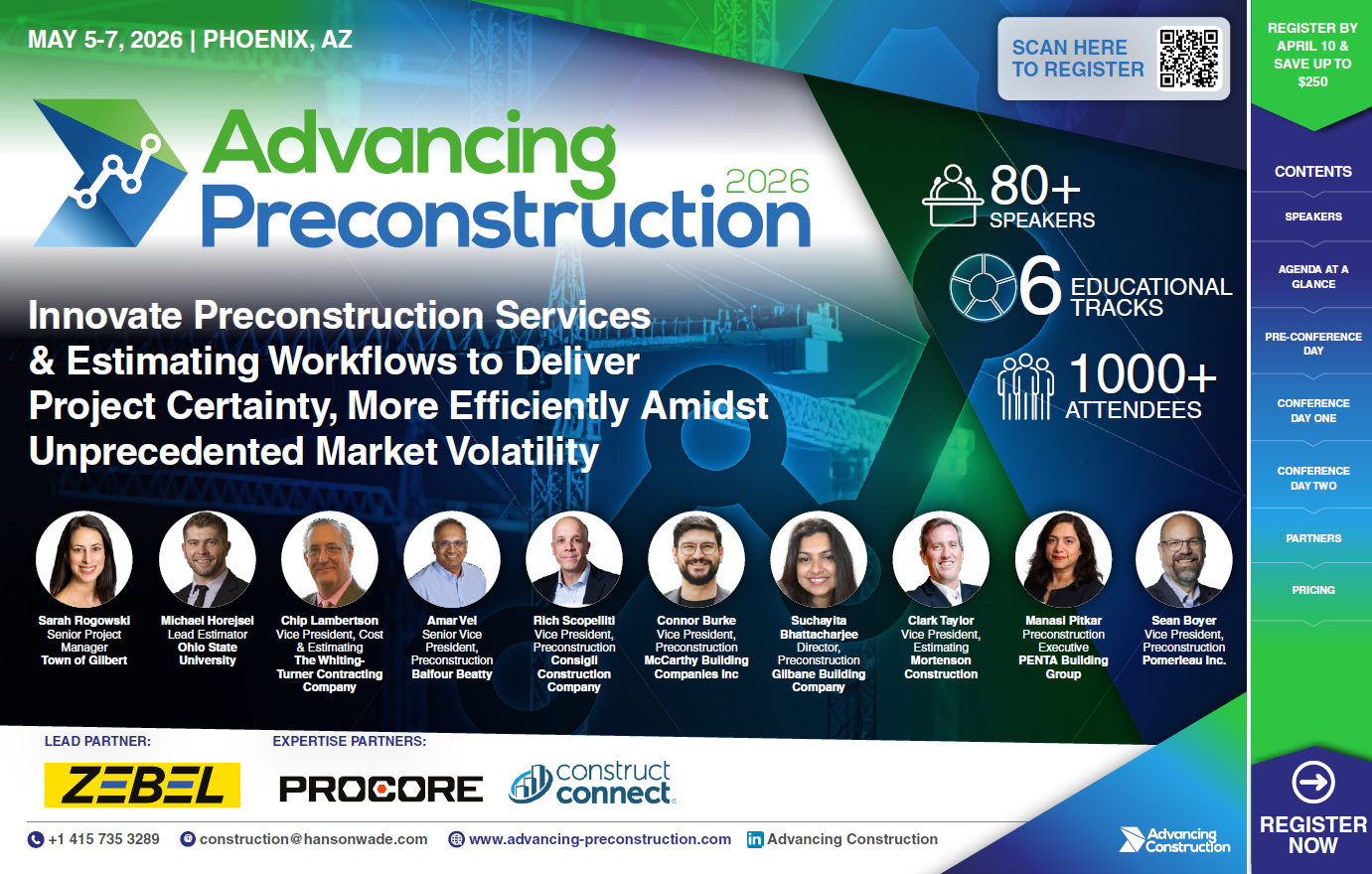
- 80+ speakers from leading GCs, Trades, Clients & Design Firms
- The US’ largest strategic preconstruction conference
- 25% of speakers from Top 30 General & Trade Contractors (ENR)
- Network with 1000+ of the nation’s most dedicated preconstruction leaders
- Brand-new ‘Preconstruction Management’ track to foster strategic innovation across all projects