Managing Risk Through Frameworks & Collaboration: Interview with James Teague
With tariffs, technology shifts, and increasingly complex site and concrete scopes, James Teague, Director of Preconstruction Solutions at Fessler & Bowman, is focused on building clarity into every stage of estimating. In this interview, he shares how early engagement, structured frameworks, and transparent risk modelling shape his team’s approach and what he’s looking forward to discussing with peers at Advancing Preconstruction 2026.

1. What impact has the introduction of new tariffs had on your firm’s preconstruction and estimating processes?
James: Tariffs have reinforced the importance of early market vendor engagement and tighter coordination between general contracting preconstruction, procurement, and operations. For the sitework and concrete scopes, we’ve seen pricing volatility in reinforcing steel, imported equipment components, and certain manufactured materials. As a result, our estimators are watching the market trends, engaging suppliers earlier, validating escalation assumptions more frequently, and building clearer allowances and contingency strategies into conceptual budgets. It has also pushed us to better document assumptions, so project stakeholders understand where market risk exists and how we’re managing it proactively.
2. How do you think increased adoption of technologies like AI and model-based estimating will change the role of estimators and preconstruction leaders?
James: AI and model-based estimating will shift estimators away from manual quantity production and toward higher-value work such as scope validation, risk analysis, logistics considerations, and strategic decision-making. Technology will accelerate take-offs, identify gaps, and surface historical cost trends, but judgment will still matter. Even more so on complex site and concrete scopes where means, methods, sequencing, and soil conditions drive outcomes. Preconstruction leaders will increasingly act as integrators, combining data, constructability insight, and market awareness to guide projects rather than just price them.
3. What best practices have your team implemented to strengthen conceptual estimating and risk mitigation on complex projects?
James: We’ve invested heavily in early collaboration and repeatable frameworks. That includes standardized conceptual models, formatting cost templates, historical benchmarking from similar projects. We also hold structured risk workshops involving estimating, field leadership, and procurement for cost feedback. For sitework and concrete, we focus initially on geotechnical risk, access and logistics, seasonal impacts, phasing constraints, and production assumptions. We also compare similar historical and current estimates with constructible means and methods during the conceptual phase, which allows us to identify cost drivers and risk exposure before designs are fully developed.
4. What are you most looking forward to about Advancing Preconstruction 2026 and why?
James: Advancing Preconstruction continues to be one of the few conferences that reveals how improvement and efficiencies in preconstruction directly impacts the success of projects. I’m most looking forward to the peer-to-peer discussions around technology adoption, risk management, and leadership development. The opportunity to hear how other companies are implementing and adapting to their processes, share lessons learned, and perceive our future industry will help increase our success and the success of others.
5. What key takeaways are you hoping to share with the Preconstruction community as a speaker at the conference?
James: I’m hoping to reinforce that great preconstruction is about clarity, collaboration, and credibility. Technology is a powerful enabler, but it doesn’t replace experience, accountability, or strong relationships with clients and trade partners. My goal is to share practical insights on building scalable estimating systems, managing risk systematically and transparently, and positioning preconstruction teams as trusted advisors who influence outcomes long before construction begins.
Explore the Previous Preconstruction Agenda
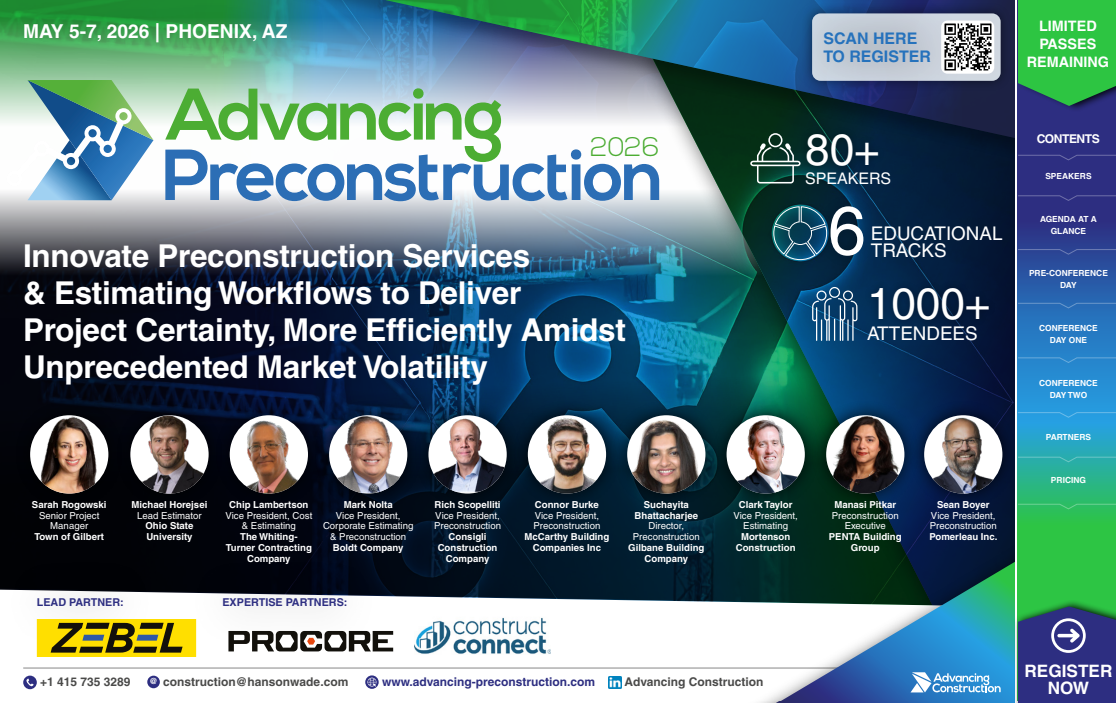
- 80+ speakers from leading GCs, Trades, Clients & Design Firms
- The US’ largest strategic preconstruction conference
- 25% of speakers from Top 30 General & Trade Contractors (ENR)
- Network with 1000+ of the nation’s most dedicated preconstruction leaders
- Brand-new ‘Preconstruction Management’ track to foster strategic innovation across all projects